
Establishing a forum dedicated to carbon farming Research and Innovation (R&I) within the CARBONICA platform represents a significant initiative to foster collaboration, knowledge sharing, and community building across various regions and expertise.
This forum is envisioned as an online space that gathers experts from all three Widening Countries (Cyprus, Greece, and North Macedonia) to pool their knowledge, experiences, and insights regarding carbon farming. It transcends geographical boundaries, encouraging participation from local experts and diaspora communities, fostering a diverse and global perspective on the subject.
At its core, this space is inclusive and inviting, welcoming project partners, stakeholders (such as farmers, researchers, policymakers, and environmentalists), and individuals enthusiastic about contributing to climate-resilient agriculture and carbon farming innovations.
Online Roundtable #10: “Governance and Implementation of Carbon Farming Systems”

Παράθεση από eratosthenes-1 σε Ιούλιος 1, 2026, 5:34 μμCARBONICA Brain Gain Roundtable #10: “Governance and Implementation of Carbon Farming Systems”
Date: June 25, 2026
Lead Working Group: Greece-Moderator: Daphne Kitsou, Interbalkan Environment Center, Greece
Working Group speakers: Thanos Arampatzis, Reframe Food, Greece (CARBONICA’s Project Coordination team)
Invited Diaspora expert speaker:
- Aikaterini Meliou, Sustainability and Policy Analyst, Hanze University of Applied Sciences, Netherlands (Academia)
MAP Representatives invited speakers:
- Maria Papatzikou, Director of Quality Control, Hellenic Accreditation System (ESYD), Greece (Policy)
- Georgios Bariamis, Research Project Manager, WaterWise Excellence Hub, Greece (Academia)
- Melissa Shukuroglou, Operations & Supply Chain Coordinator, Premier Shukuroglou, Cyprus (Industry/Business)
- Damjan Dimevski, Farmer, North Macedonia (Farming sector/Civil Society)
Key outcomes
- Carbon farming governance requires coherent and integrated institutional frameworks
The discussion highlighted persistent fragmentation in carbon farming standards and governance structures. Participants emphasized the need for aligned institutional frameworks that ensure environmental integrity, reduce greenwashing risks, and support consistent implementation across regions.
- Credible MRV systems are the foundation of trust in carbon markets
Robust measurement, reporting, and verification (MRV) systems, supported by accredited conformity assessment (e.g. ISO/IEC 17025), were identified as essential for translating environmental data into credible claims. Independent verification mechanisms are central to market trust and policy legitimacy.
- Multi-actor platforms enable alignment between policy, science, and practice
The CARBONICA multi-actor approach was reinforced as a key mechanism for connecting policymakers, researchers, industry, and farmers. Living-lab style collaboration and capacity-building initiatives were highlighted as essential tools for co-developing and scaling practical solutions.
- Adaptive governance strengthens stakeholder engagement and implementation
Insights from the diaspora speaker’s research demonstrated that trust, transparency, empowerment, and continuous learning are critical for effective stakeholder engagement. Adaptive governance models enable iterative policy development and improved farmer participation, particularly when targeting younger generations.
- Integration of water, carbon, and circular economy systems increases systemic impact
The potential for combining water management, carbon farming, nature-based solutions, and digital monitoring systems was illustrated. Participants emphasized the opportunity to design integrated resource governance frameworks supporting circular economy transitions.
- Composting is a practical pathway for carbon sequestration and soil restoration
Industrial composting was presented as a scalable circular economy solution that diverts organic waste from landfills, enhances soil organic matter, and supports carbon storage in agricultural systems. However, business viability depends on clear funding structures and policy incentives.
- Farmer-led implementation confirms agronomic and resilience benefits
The farmer case study demonstrated that reduced tillage, cover crops, crop rotation, and organic fertilization improve soil stability, moisture retention, and overall resilience. Practical experience confirmed that carbon farming can deliver tangible on-farm benefits beyond carbon metrics.
💬 We invite forum members to share their views by responding to the pinned poll above. Your input helps enrich the discussion and reflect diverse perspectives from across the carbon farming community!
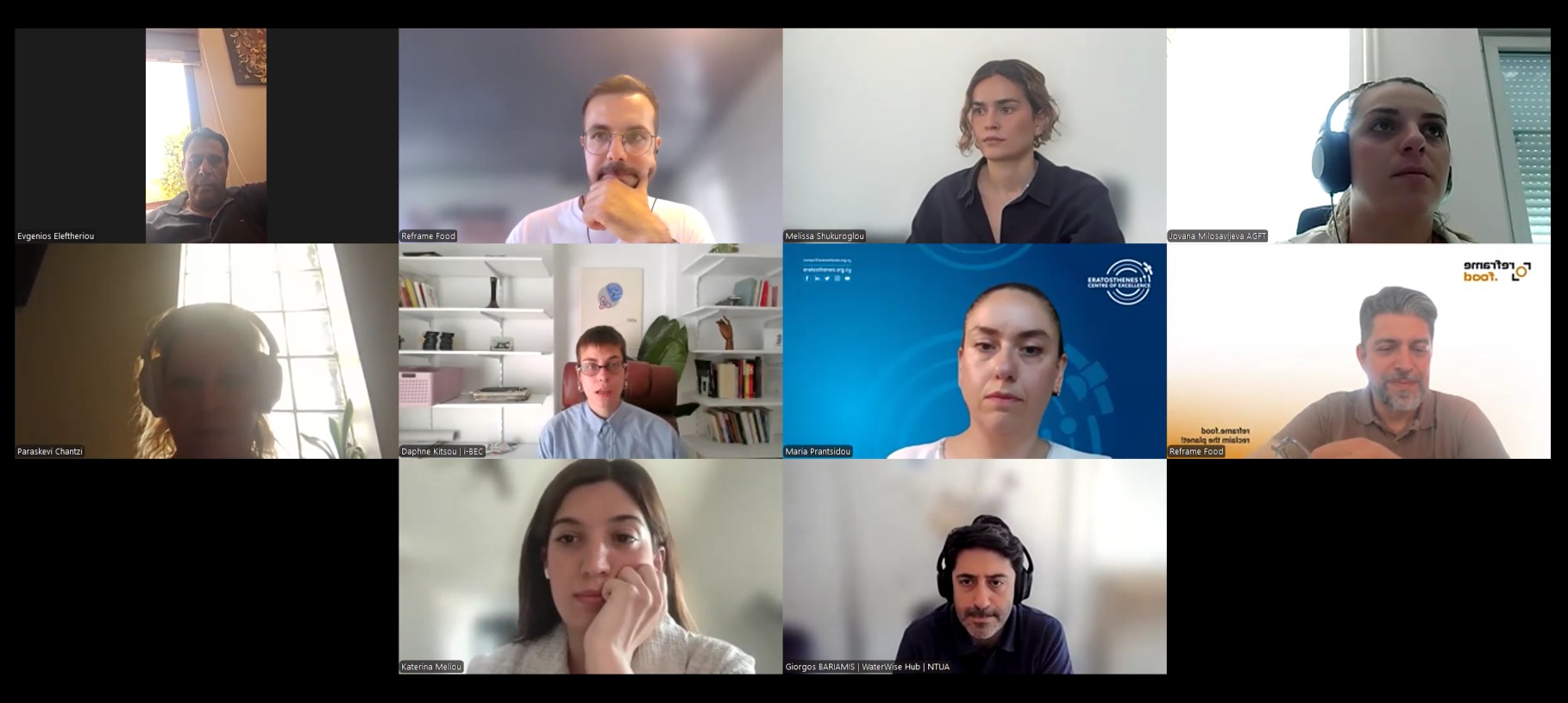
📸 Participants and speakers during the CARBONICA Roundtable #10:
CARBONICA Brain Gain Roundtable #10: “Governance and Implementation of Carbon Farming Systems”
Date: June 25, 2026
Lead Working Group: Greece-Moderator: Daphne Kitsou, Interbalkan Environment Center, Greece
Working Group speakers: Thanos Arampatzis, Reframe Food, Greece (CARBONICA’s Project Coordination team)
Invited Diaspora expert speaker:
- Aikaterini Meliou, Sustainability and Policy Analyst, Hanze University of Applied Sciences, Netherlands (Academia)
MAP Representatives invited speakers:
- Maria Papatzikou, Director of Quality Control, Hellenic Accreditation System (ESYD), Greece (Policy)
- Georgios Bariamis, Research Project Manager, WaterWise Excellence Hub, Greece (Academia)
- Melissa Shukuroglou, Operations & Supply Chain Coordinator, Premier Shukuroglou, Cyprus (Industry/Business)
- Damjan Dimevski, Farmer, North Macedonia (Farming sector/Civil Society)
Key outcomes
- Carbon farming governance requires coherent and integrated institutional frameworks
The discussion highlighted persistent fragmentation in carbon farming standards and governance structures. Participants emphasized the need for aligned institutional frameworks that ensure environmental integrity, reduce greenwashing risks, and support consistent implementation across regions.
- Credible MRV systems are the foundation of trust in carbon markets
Robust measurement, reporting, and verification (MRV) systems, supported by accredited conformity assessment (e.g. ISO/IEC 17025), were identified as essential for translating environmental data into credible claims. Independent verification mechanisms are central to market trust and policy legitimacy.
- Multi-actor platforms enable alignment between policy, science, and practice
The CARBONICA multi-actor approach was reinforced as a key mechanism for connecting policymakers, researchers, industry, and farmers. Living-lab style collaboration and capacity-building initiatives were highlighted as essential tools for co-developing and scaling practical solutions.
- Adaptive governance strengthens stakeholder engagement and implementation
Insights from the diaspora speaker’s research demonstrated that trust, transparency, empowerment, and continuous learning are critical for effective stakeholder engagement. Adaptive governance models enable iterative policy development and improved farmer participation, particularly when targeting younger generations.
- Integration of water, carbon, and circular economy systems increases systemic impact
The potential for combining water management, carbon farming, nature-based solutions, and digital monitoring systems was illustrated. Participants emphasized the opportunity to design integrated resource governance frameworks supporting circular economy transitions.
- Composting is a practical pathway for carbon sequestration and soil restoration
Industrial composting was presented as a scalable circular economy solution that diverts organic waste from landfills, enhances soil organic matter, and supports carbon storage in agricultural systems. However, business viability depends on clear funding structures and policy incentives.
- Farmer-led implementation confirms agronomic and resilience benefits
The farmer case study demonstrated that reduced tillage, cover crops, crop rotation, and organic fertilization improve soil stability, moisture retention, and overall resilience. Practical experience confirmed that carbon farming can deliver tangible on-farm benefits beyond carbon metrics.
💬 We invite forum members to share their views by responding to the pinned poll above. Your input helps enrich the discussion and reflect diverse perspectives from across the carbon farming community!
📸 Participants and speakers during the CARBONICA Roundtable #10:
Παράθεση από eratosthenes-1 σε Ιούλιος 1, 2026, 7:09 μμThe 10th CARBONICA Brain Gain Roundtable highlighted that accelerating carbon farming requires more than supportive policies—it depends on coordinated action across the entire innovation ecosystem. Effective governance should be accompanied by strategic investments, cross-sector collaboration, and enabling mechanisms that connect policymakers, researchers, industry, farmers and civil society.
Several key themes emerged during the discussion:
- Policy & Governance: How can governments develop enabling policy frameworks and financial incentives that encourage the widespread adoption of carbon farming while ensuring transparency, trust and long-term impact?
- Research, Innovation & Academia: How can funding and stronger collaboration between universities, research organisations and innovation actors accelerate the development, validation and adoption of carbon farming technologies? What role should academia play in capacity building, knowledge transfer and supporting evidence-based policymaking?
- Industry & Circular Economy: How can industry contribute by scaling the production and supply of sustainable carbon farming inputs (e.g. compost, biochar and other soil amendments), creating new green business opportunities, and strengthening the circular economy?
- Collaboration & Co-creation: How can Living Labs, Multi-Actor Platforms and cross-sector partnerships strengthen knowledge exchange, pilot testing, and the implementation of carbon farming practices?
We'd love to hear your perspective:
- Which of these areas do you believe should be prioritised to accelerate carbon farming?
- Are there successful examples of collaboration, policy support or innovation from your country that could inspire others?
- What additional actions or partnerships are needed to build a resilient and scalable carbon farming ecosystem?
Cast your vote in the poll and join the discussion by sharing your experiences, ideas and examples in the comments below.
The 10th CARBONICA Brain Gain Roundtable highlighted that accelerating carbon farming requires more than supportive policies—it depends on coordinated action across the entire innovation ecosystem. Effective governance should be accompanied by strategic investments, cross-sector collaboration, and enabling mechanisms that connect policymakers, researchers, industry, farmers and civil society.
Several key themes emerged during the discussion:
- Policy & Governance: How can governments develop enabling policy frameworks and financial incentives that encourage the widespread adoption of carbon farming while ensuring transparency, trust and long-term impact?
- Research, Innovation & Academia: How can funding and stronger collaboration between universities, research organisations and innovation actors accelerate the development, validation and adoption of carbon farming technologies? What role should academia play in capacity building, knowledge transfer and supporting evidence-based policymaking?
- Industry & Circular Economy: How can industry contribute by scaling the production and supply of sustainable carbon farming inputs (e.g. compost, biochar and other soil amendments), creating new green business opportunities, and strengthening the circular economy?
- Collaboration & Co-creation: How can Living Labs, Multi-Actor Platforms and cross-sector partnerships strengthen knowledge exchange, pilot testing, and the implementation of carbon farming practices?
We'd love to hear your perspective:
- Which of these areas do you believe should be prioritised to accelerate carbon farming?
- Are there successful examples of collaboration, policy support or innovation from your country that could inspire others?
- What additional actions or partnerships are needed to build a resilient and scalable carbon farming ecosystem?
Cast your vote in the poll and join the discussion by sharing your experiences, ideas and examples in the comments below.
 EL
EL  EN
EN  MK
MK 